
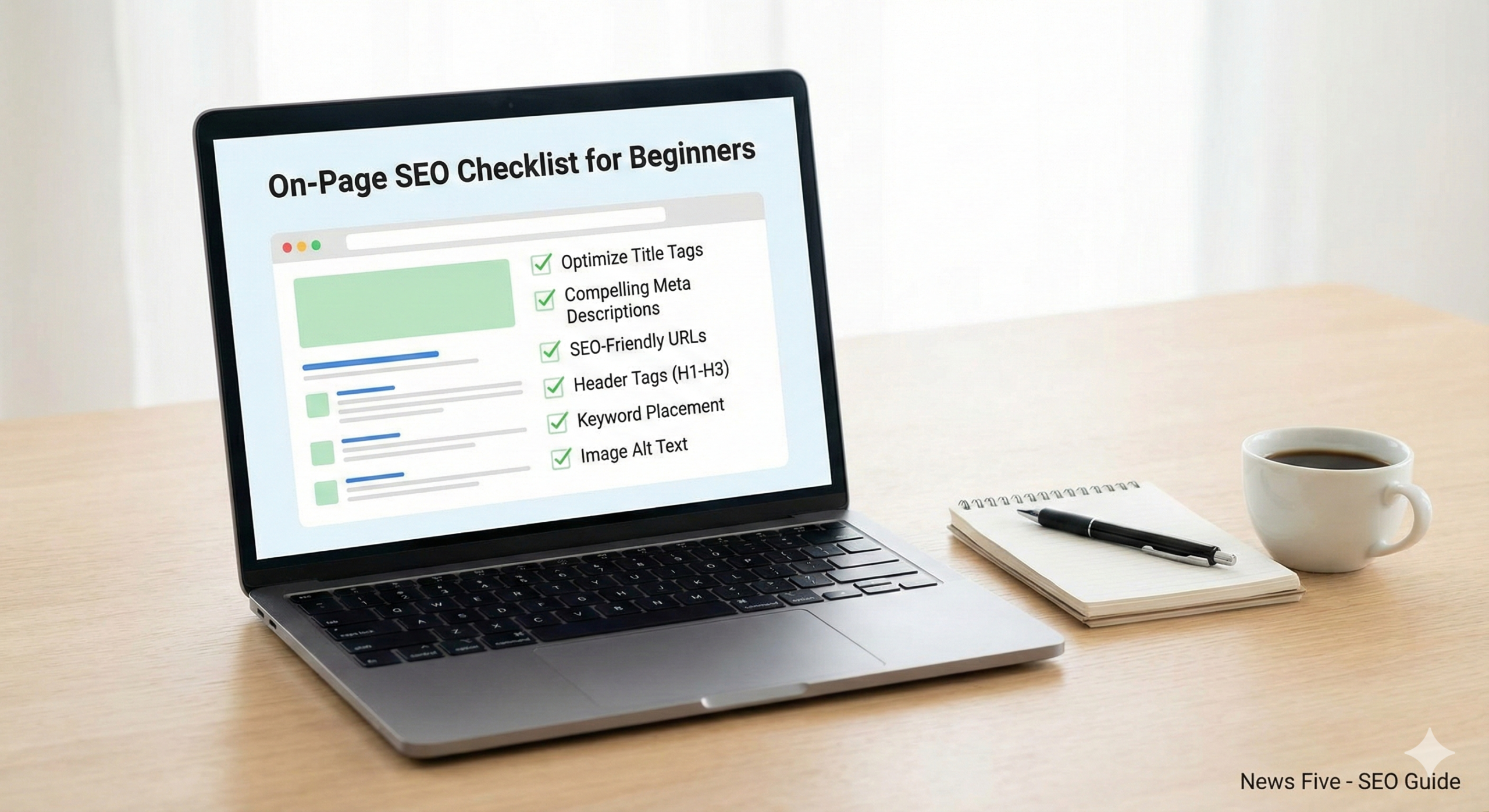
Entering the world of digital marketing can feel overwhelming, but mastering the On-Page SEO Checklist for Beginners is the most effective way to start ranking your website. Unlike off-page factors which can be out of your control, on-page SEO is entirely in your hands. It involves optimizing individual web pages to rank higher and earn more relevant traffic in search engines.
In this guide, I will walk you through a detailed, step-by-step process used by experts to optimize content. Whether you are running a retail store, a real estate firm, or a personal blog, these strategies are universal.
What is On-Page SEO and Why Does It Matter?
On-page SEO (also known as on-site SEO) refers to the practice of optimizing web page content for search engines and users. Common on-page SEO practices include optimizing title tags, content, internal links, and URLs.
It is different from technical SEO (which deals with site speed and indexing) and off-page SEO (which deals with backlinks).
Why is On-Page SEO Crucial for Rank Growth?
Google’s algorithm is constantly evolving. It is no longer just about stuffing keywords into a paragraph. Today, search engines look at semantics, user intent, and relevance.
If your on-page elements are not optimized, even the best content will remain invisible. Proper optimization helps search engine bots understand what your page is about and connects you with the right audience.
How Do You Start? The Pre-Optimization Phase
Before you touch your website code or CMS (Content Management System), you need a plan.
1. Keyword Research and Search Intent
You cannot optimize a page if you don’t know what people are searching for.
- Primary Keyword: The main term you want to rank for.
- LSI Keywords: Latent Semantic Indexing keywords (related terms) that provide context.
Example: If you are writing about “Vegan Pizza,” your LSI keywords might be dairy-free cheese, plant-based recipes, and healthy pizza crust.
Search Intent: Ask yourself, is the user looking to buy (transactional) or learn (informational)? Match your content to this intent.
The Ultimate On-Page SEO Checklist
Here is your step-by-step checklist to ensure every page is perfectly tuned for the search engine results pages (SERPs).
2. Optimize Your Title Tag
The title tag is the most critical on-page ranking factor after the content itself. It is the blue link users see in Google.
- Best Practice: Keep it under 60 characters so it doesn’t get cut off.
- Placement: Place your primary keyword at the beginning of the title.
- Example:
- Bad: Pizza Recipes for Everyone.
- Good: Vegan Pizza Recipe: A Simple Guide for Beginners.
3. Write a Compelling Meta Description
While meta descriptions are not a direct ranking factor, they influence your Click-Through Rate (CTR). A higher CTR signals to Google that your page is valuable.
- Action: Write a summary under 160 characters.
- Tip: Include a Call to Action (CTA) and your target keyword.
- Example: “Looking for the best vegan pizza recipe? Our dairy-free guide covers crusts, toppings, and baking tips. Click to start cooking today!”
4. Create SEO-Friendly URLs
Your URL structure should be clean, readable, and static. Avoid ugly parameters with random numbers.
- Structure: Use hyphens to separate words.
- Length: Keep it short and descriptive.
- Example:
- Bad:
www.website.com/p=123? - Good:
www.website.com/vegan-pizza-recipe
- Bad:
How to Structure Your Content for SEO?
Content is king, but structure is the castle. Google loves hierarchy.
5. Optimize Header Tags (H1, H2, H3)
Header tags help crawlers understand the structure of your page.
- H1 Tag: This is your main headline. You should only have one H1 per page. It must include your main keyword.
- H2 Tags: Use these for main sections. Include related keywords here.
- H3 Tags: Use these to break down H2 sections further.
6. Keyword Placement and Density
Don’t spam your keyword. Use it naturally.
- First 100 Words: Drop your main keyword in the first paragraph.
- Frequency: Aim for a density of 1-2%, but focus on readability first.
- Synonyms: Use variations of your keyword to avoid repetition.
7. Content Quality and Readability
Google uses “dwell time” (how long a user stays on your page) as a quality signal. If your content is hard to read, users will bounce.
- Paragraphs: Keep paragraphs short (2-3 sentences).
- Formatting: Use bullet points and bold text for key takeaways.
- Value: Ensure the content actually solves the user’s problem.
Visuals and Linking Strategy
A wall of text is boring. You need to engage the user visually and guide them through your site.
8. Image Optimization and Alt Text
Search engines cannot “see” images; they read the code behind them.
- File Name: Rename
IMG_001.jpgtovegan-pizza-crust.jpgbefore uploading. - Alt Text: Describe the image accurately. This is crucial for accessibility and SEO.
- Size: Compress images to ensure fast loading speeds (use WebP format if possible).
9. Internal Linking
Internal links connect your content and help Google crawl your site effectively. They pass “link juice” (authority) from one page to another.
- Strategy: Link to 2-3 related articles on your own site.
- Anchor Text: Use descriptive text for the link (e.g., “Check out our dough kneading guide“) rather than “Click here.”
10. External Linking
Don’t be afraid to link out. Linking to authoritative sources (like Wikipedia or major news outlets) builds trust and shows Google you have done your research.
When Should You Focus on Technical Factors?
Even if your content is great, technical issues can hold you back. While this is often a separate field, basic technical on-page SEO is essential for writers and beginners.
11. Mobile Responsiveness
With Google’s Mobile-First Indexing, the mobile version of your site is the one that counts.
- Test: Resize your browser window. Does the text adjust? Do images fit?
- UX: Ensure buttons are clickable and text is readable on small screens.
12. Page Speed
Slow pages kill conversions. Users will leave if a page takes more than 3 seconds to load.
- Action: Minimize code, use browser caching, and optimize image sizes.
- Tools: Use Google PageSpeed Insights to check your score.
13. Schema Markup (Structured Data)
This is advanced but worth mentioning. Schema is code that helps search engines understand your content better (e.g., telling Google that a page is a “Recipe” so it shows cooking time in the search results).
- Tip: Use a plugin if you are on WordPress to handle this automatically.
Summary: Your Daily SEO Routine
To recap, successful SEO is about consistency. Every time you publish a new page, run it through this simple checklist:
- Keyword: Is the primary keyword in the H1, URL, and first paragraph?
- Title/Meta: Are they enticing and within character limits?
- Structure: Are you using H2s and H3s correctly?
- Images: Do all images have Alt Text?
- Links: Have you added internal links to other relevant pages?
- Speed: Does the page load quickly?
By following this On-Page SEO Checklist for Beginners, you are laying a solid foundation for organic growth. Remember, SEO is a marathon, not a sprint. Implement these changes, monitor your results, and watch your rankings climb.
Leave a Reply