
Many founders get overwhelmed by SEO. You might think you need to write hundreds of blog posts or hire an expensive agency immediately. That is not true.
If you are wondering how to do seo for startups the right way, the answer is to start small and focus on what brings money first. Startups are different from big companies. You don’t have years of history or a huge budget. You need to move fast.
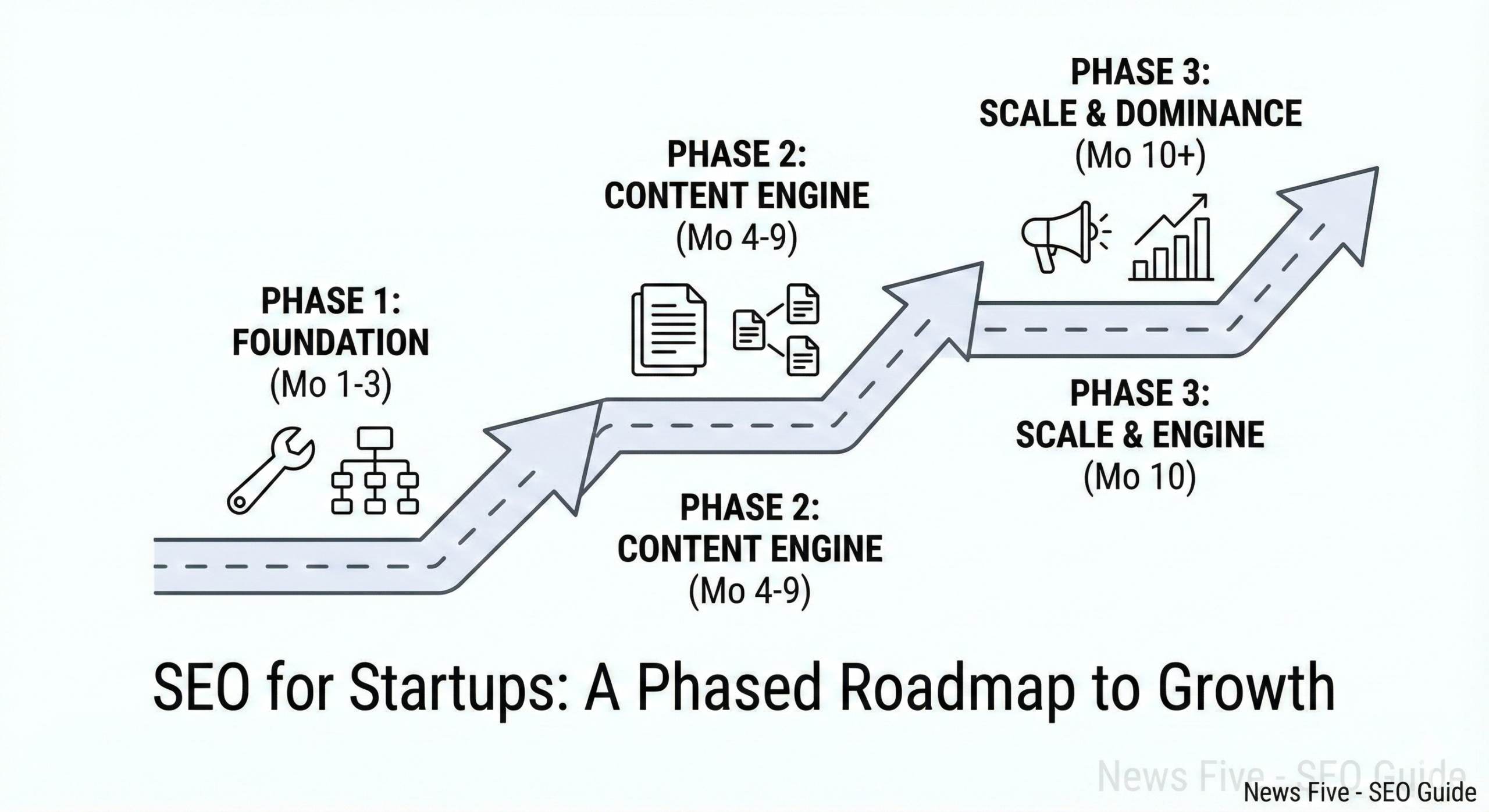
This guide will give you a simple, 3-phase plan. We will move from fixing the basics to growing your traffic and finally scaling up.
Why SEO is Better Than Paid Ads
Many startups rely on paid ads (like Facebook or Google Ads). The problem is the cost. The moment you stop paying for ads, your traffic stops. It is like renting a house; you never own it.
SEO is different. It is like building a house. It takes work upfront, but once you rank high, you get “free” traffic every day. This lowers your Customer Acquisition Cost (CAC). Over time, SEO becomes your cheapest way to get new customers.
Phase 1: The Foundation (Months 1–3)
In the first three months, do not try to rank for big, popular keywords. You are too new. Your goal now is to set up your website correctly and target people who are ready to buy.
Fix the Technical Basics
You don’t need a perfect website, but it must be healthy. Google will not rank a broken site. Focus on these four things:
- Speed: Your website must load fast. If it is slow, visitors will leave.
- Mobile-Friendly: Most people search on their phones. Make sure your site looks good on mobile.
- SSL Certificate: This is the “lock” icon in the browser bar. It keeps your site secure.
- Sitemap: This is a simple file that lists all your pages. You submit this to Google so it can find your content.
Find “High Intent” Keywords
Keyword research is not about finding words with the most searches. It is about finding words that lead to sales.
Instead of trying to rank for a broad word like “software,” look for specific phrases. We call these “Long-Tail Keywords.”
- Bad Example: “Marketing tools” (Too broad, too hard to rank).
- Good Example: “Best marketing tool for small yoga studios.”
People searching for the second phrase know exactly what they want. They are ready to buy. Even if only 50 people search for it, they are valuable 50 people.
Build Your “Money Pages”
These are the pages that actually sell your product. Create these first:
- Homepage: Say clearly what you do.
- Pricing Page: People searching for prices are close to buying.
- Comparison Page: Write a page comparing “Your Product vs. Competitor.” People love to compare before they buy.
Phase 2: The Content Engine (Months 4–9)
Now that your site is working well, you need to build Topical Authority. This simply means proving to Google that you are an expert in your field.
The Hub and Spoke Model
Don’t write random articles. Organize them.
- The Hub (Pillar Page): Write one long, complete guide on a main topic. For example, ” The Ultimate Guide to Remote Work.”
- The Spokes (Cluster Pages): Write smaller articles that answer specific questions, like “Best microphones for remote work” or “How to manage time remotely.”
Link all the small articles back to the main guide. This Internal Linking structure tells Google, “We know everything about this topic.”
How to Get Backlinks (Mentions)
A Backlink is when another website links to yours. Google sees this as a vote of confidence. Since you can’t buy these easily, you must earn them.
- Create Free Tools: If you build a simple calculator or a free template, other websites will link to it because it is useful.
- Share Original Data: Did you run a survey? Publish the results. News sites love to link to new data.
Match the User’s Intent
Always ask: What does the user want?
- If they search “what is SEO,” they want to learn. Write a blog post.
- If they search “hire SEO agency,” they want to buy. Show them a service page.
Phase 3: Scaling Up (Months 10+)
By now, you should have steady traffic. It is time to grow faster using smart technology.
What is Programmatic SEO?
This sounds complex, but it is simple. It means using data to create many pages at once.
Think of a travel site. They don’t write a new article for every hotel. They use a database to automatically create pages like “Best Hotels in London,” “Best Hotels in Paris,” etc. If you have data, you can create hundreds of useful landing pages to capture more search traffic.
Keep Content Fresh
Content gets old. Google prefers fresh information. Every few months, go back to your old articles. Update the dates, fix broken links, and add new information. This prevents Content Decay (losing rankings over time).
Strategy for Your Specific Industry
- For SaaS Companies: Focus on “Problem-Solving” content. Write articles that show how your software solves a specific problem.
- For E-commerce Stores: Focus on your Category pages. Add reviews (stars) so they show up in Google search results. This is called Schema Markup.
- For Local Businesses: Ensure your Google Business Profile is 100% complete. Make sure your name, address, and phone number are the same everywhere on the internet.
How to Measure Success
Don’t just look at how much traffic you get. That is a “vanity metric.” Look at the numbers that help your business survive.
- Conversion Rate: How many visitors are actually signing up or buying?
- Revenue: How much money is SEO bringing in?
- Rankings: Are you moving up for your main keywords?
Conclusion: Start Phase 1 Today
SEO takes time, but it is the best investment for a startup. You don’t need to do everything at once.
Your Plan:
- Months 1-3: Fix technical errors and create pages that sell.
- Months 4-9: Write helpful content groups (Hub and Spokes).
- Months 10+: Scale up and update old content.
Follow this roadmap on how to do seo for startups, and you will see your growth graph go up. Don’t wait for perfection—start today.
Leave a Reply