
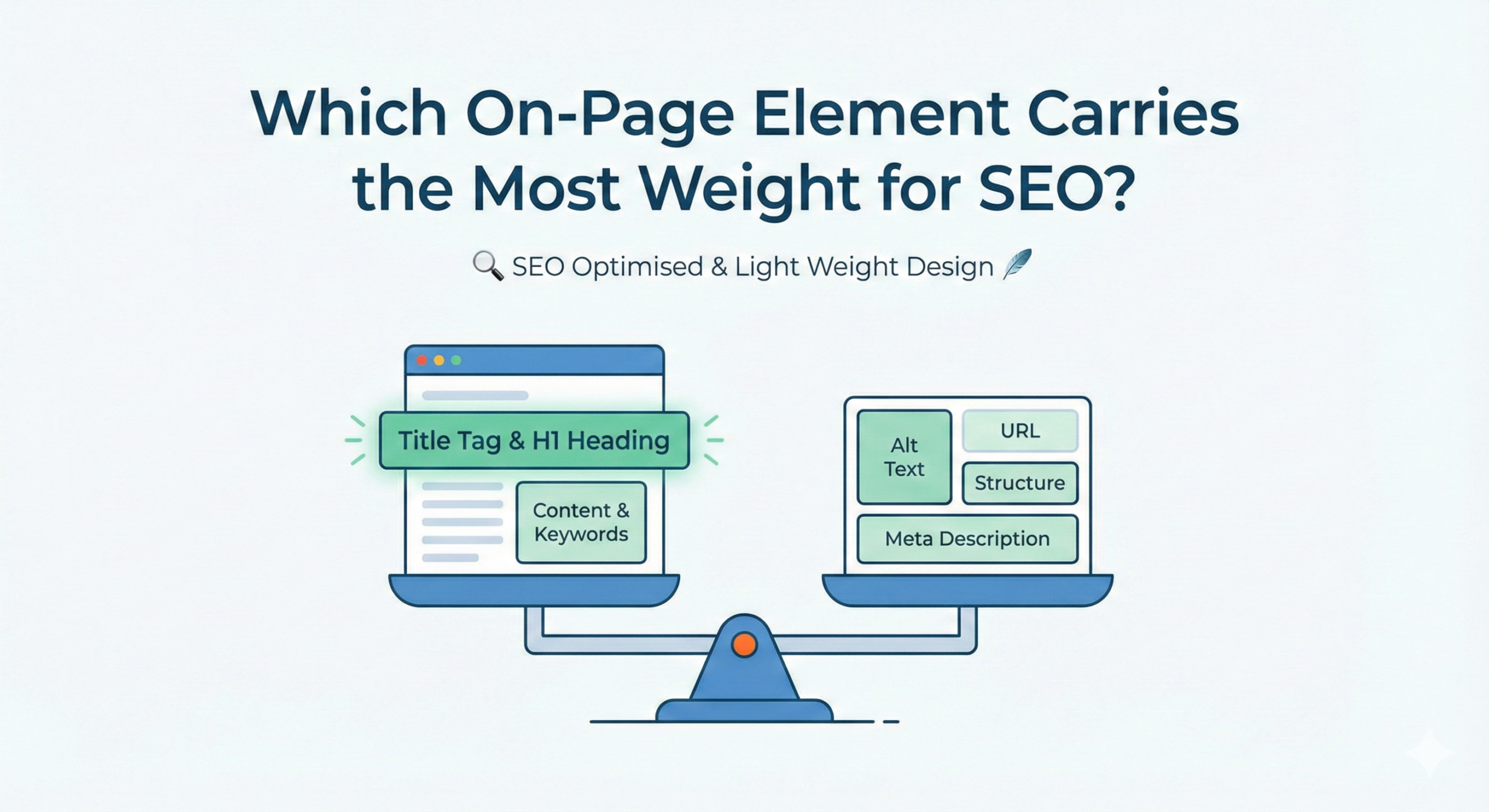
In the vast and ever-changing landscape of digital marketing, understanding the hierarchy of ranking factors is crucial for success. Many business owners, content creators, and marketers frequently ask which on-page element carries the most weight for SEO when trying to prioritize their optimization efforts. While Google’s algorithm is a complex puzzle composed of over 200 different signals, one specific HTML element consistently stands out as the foundational pillar of page relevance and ranking potential. Identifying this element helps you focus your energy where it matters most.
The Title Tag: The Heavyweight Champion of On-Page SEO
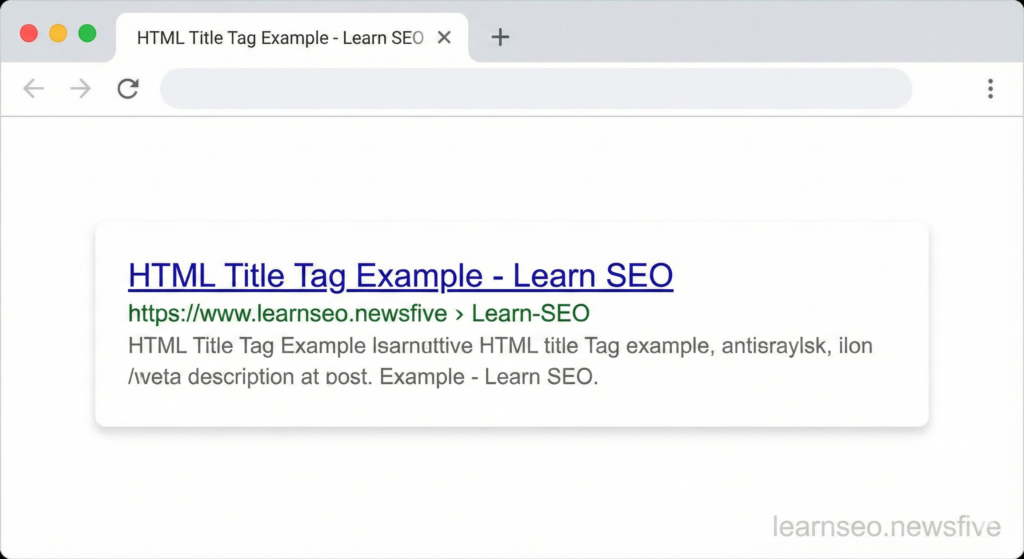
If we must isolate a single HTML tag that wields the most influence over your search rankings, it is undoubtedly the Title Tag. This element is the clickable headline that appears in search engine results pages (SERPs). It serves as the primary clue for search engine bots to understand what your page is about.
From a user perspective, the title tag is the first impression of your brand. It determines whether a user clicks on your link or scrolls past it to a competitor. Because it serves the dual purpose of informing the algorithm and enticing the human reader, it carries the most significant weight in the on-page hierarchy.
How to Optimize Your Title Tag for Maximum Impact?
To harness the power of the title tag, you need to be strategic. Simply stuffing keywords into the header is no longer effective and can look spammy.
Front-Load Your Main Keywords Search engines tend to place more weight on words that appear at the beginning of the title tag. If you are targeting “organic coffee beans,” ensure those words appear as early as possible in the title rather than at the end.
Keep It Concise Google typically displays the first 50 to 60 characters of a title tag. If your title is too long, it will get truncated with ellipses (…), which can hide important information and lower your Click-Through Rate (CTR).
Use Power Words and Modifiers Adding modifiers like “Best,” “Guide,” “Review,” or the current year can help you rank for long-tail versions of your keyword. These words also act as psychological triggers that encourage users to click.
What Role Does the H1 Header Play?
While the title tag appears in the search results, the H1 Header is the headline users see once they actually land on your page. Many SEO beginners confuse the two, but they serve different functions.
The H1 tag acts as a second verification for search engines. It confirms that the content on the page matches the promise made in the title tag. For the best SEO results, your H1 should be similar to your title tag but doesn’t need to be identical.
Semantic Relevance The H1 provides structure. It tells Google, “This is the main topic of the document.” Ensuring your primary keyword is present in the H1 is essential. It reinforces the topical relevance of the page, signaling to the crawler that the content is focused and specific.
How Does Content Quality and Intent Weigh In?
Technically, content is the body of the page rather than a single “element,” but in the modern SEO era, it carries immense weight. You can have a perfect title tag and a clean H1, but if the content doesn’t satisfy the user’s search intent, your rankings will drop.
Satisfying Search Intent Google prioritizes pages that solve the user’s problem. If a user searches for “how to fix a leaky faucet,” they want a tutorial, not a product page selling wrenches. Aligning your content format with user expectation is critical.
Keyword Frequency and LSI Gone are the days of keyword stuffing. Today, you must focus on Latent Semantic Indexing (LSI) keywords. These are terms conceptually related to your main topic. For example, if you are writing about “Apple,” words like “fruit,” “pie,” and “orchard” help Google understand you aren’t talking about the technology company.
When Do Meta Descriptions Matter?
There is often a debate about the importance of the Meta Description. It is important to clarify that the meta description is not a direct ranking factor. Google does not use the keywords inside the description to calculate your rank.
However, it carries significant indirect weight. The meta description acts as your ad copy in the search results. A compelling description increases your Click-Through Rate (CTR).
The CTR Connection If more people click on your result because of a well-written description, Google notices. A high CTR signals that your page is relevant and valuable, which can eventually boost your rankings. Therefore, treat the meta description as a vital conversion element.
What About URL Structure?
The structure of your URL is a subtle but powerful on-page signal. A clean, descriptive URL helps search engines understand the hierarchy and context of the page before they even crawl the content.
Keep it Short and Readable Avoid URLs with random strings of numbers or symbols (e.g., website.com/p=123). Instead, use a structure that includes your target keyword (e.g., website.com/red-running-shoes).
Hyphens vs. Underscores Always use hyphens to separate words in your URL. Google reads hyphens as spaces, whereas it reads underscores as joining characters. This small technical detail can impact how your keywords are indexed.
How Do Internal Linking and Architecture Contribute?
Internal linking is the unsung hero of on-page SEO. It involves linking from one page on your domain to another. This element carries weight because it distributes “link juice” or authority throughout your site.
Establishing Hierarchy By linking from high-authority pages (like your homepage) to newer blog posts, you pass authority to those new pages, helping them get indexed faster and rank higher.
Contextual Anchors The clickable text in a link, known as the anchor text, tells Google what the destination page is about. Using descriptive anchor text (e.g., “learn more about SEO audits”) carries more weight than generic text like “click here.”
Why is Mobile Responsiveness and Page Speed Critical?
In the era of Core Web Vitals, the technical performance of your page is a massive ranking factor. While these are often categorized under technical SEO, they are intrinsic to the on-page experience.
Mobile-First Indexing Google now predominantly uses the mobile version of the content for indexing and ranking. If your page elements shift, break, or load slowly on a smartphone, your rankings will suffer regardless of how good your title tag is.
Visual Stability Elements that move around as the page loads (Cumulative Layout Shift) frustrate users. Ensuring your on-page code (HTML/CSS) is clean and stable is a heavy weighting factor in the modern algorithm.
Conclusion
So, to answer the question: The Title Tag is the on-page element that carries the most weight for SEO in a technical sense. It is the strongest signal to search engines regarding the topic of your page. However, SEO is a holistic discipline. A strong title tag must be supported by a descriptive H1, a clean URL structure, and, most importantly, high-quality content that satisfies user intent.
By optimizing these elements in harmony, you create a seamless experience for both search engine crawlers and human readers. SEO is not about tricking the system; it is about providing clear, structured, and valuable signals that prove your page deserves the top spot. Start with your title tag, but ensure the rest of your on-page symphony plays in tune.
Leave a Reply